
Six Ways Roundabout Worcester
The roundabout Worcester learners worry about most – broken down lane by lane, exit by exit, by a local DVSA driving instructor.
If there is one junction that comes up again and again with my Worcester pupils, it is Six Ways roundabout. Six roads meeting at one island, several sets of lane markings, and exits that all start to look the same as you come round – it is a lot to read in a short space of time. Get into the wrong lane early and everything after it feels rushed.
The good news is that Six Ways (you will also see it written “sixways” or “6 ways”) is completely manageable once you understand how it is laid out and what to look for on each approach. I have been teaching learners through this roundabout for over 20 years, and almost every mistake I see comes down to the same handful of things: reading the lane markings too late, drifting out of lane on the way round, or signalling at the wrong moment. This page walks you through it the way I would talk you through it in the car – with short videos of the real approaches so you know exactly what is coming.
How Six Ways works (get this and the rest is easy)
Six Ways is a large roundabout, so the single most important habit is to read the signs and lane markings early – before you are on top of the island. On the approach you will usually see a map-style sign showing where each exit goes, and then the destination painted in your lane. Match the two up early, choose your lane in good time, and hold that lane all the way round to your exit.
The approaches, one at a time
Tap any video to play it. Each one shows a real approach to Six Ways and the exit you need.

A449 · 3rd exit (Kidderminster)
The classic “two lanes, same destination” one. Both the middle and right lanes are marked A449 — take the left of the two for the 3rd exit. Read the sign on the approach early and keep left as the lane curves round.

From Droitwich · A4440 (Worcester)
You go most of the way round to the A4440 (Worcester) exit, so lane discipline matters. Settle into the correct lane early, keep your speed low enough to react, and hold your lane all the way round.

From Droitwich · A449
Read the lane markings on the approach and settle into the correct lane in good time. Switch to a left signal as you reach your exit, not before, so the traffic around you can read you.
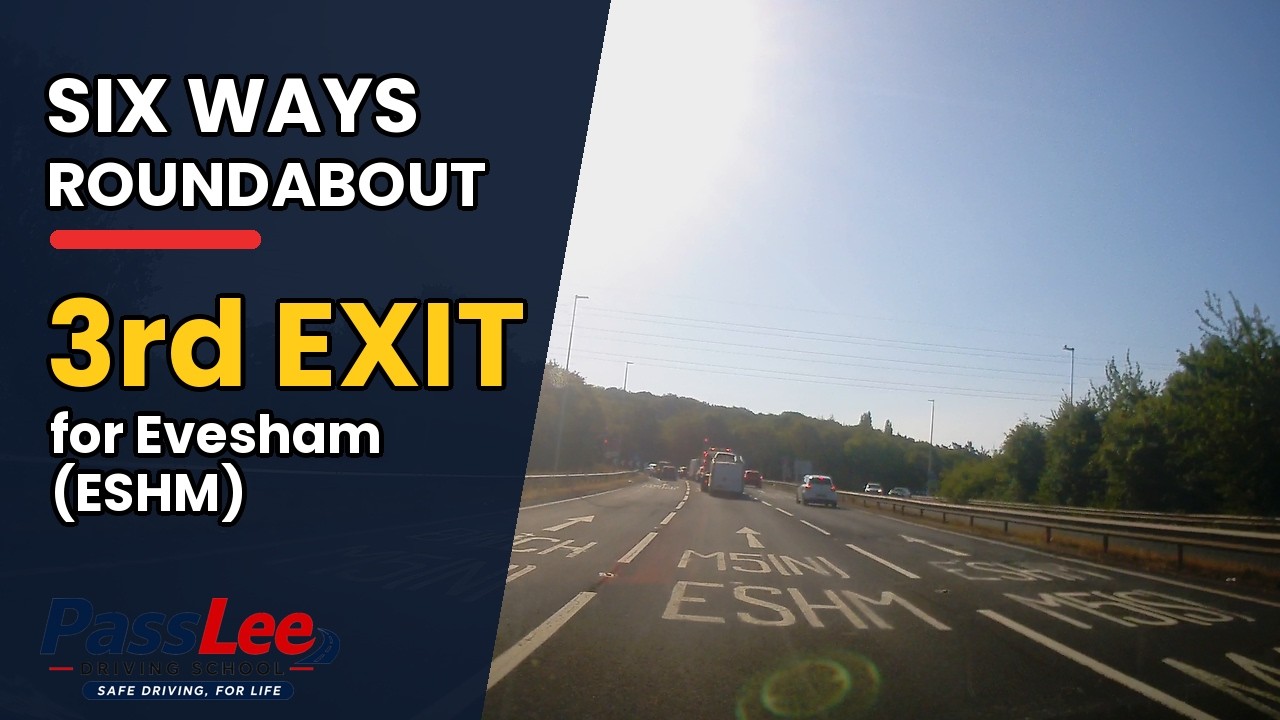
From the A449 · Evesham
It feels almost straight ahead, which is when learners relax and drift. Read the markings, choose your lane, and keep the car tracking cleanly round to the Evesham exit.
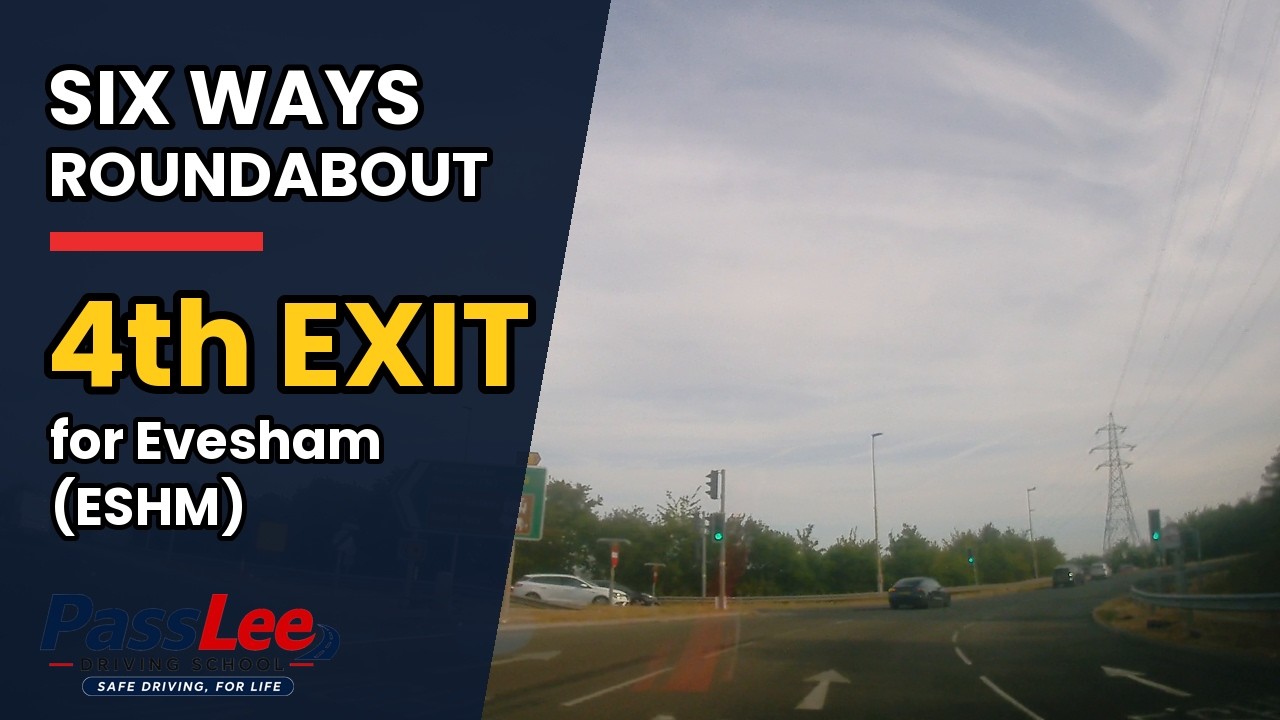
From the A4440 · Evesham
Coming in on the A4440 ring road for the Evesham exit. Read the sign, pick your lane, hold it — and don’t let the car wander toward the lane line as you come off.

From Evesham · Droitwich
The thing to watch is not signalling too early — hold your position, then indicate for your exit at the right moment so drivers waiting to join can read your intentions.
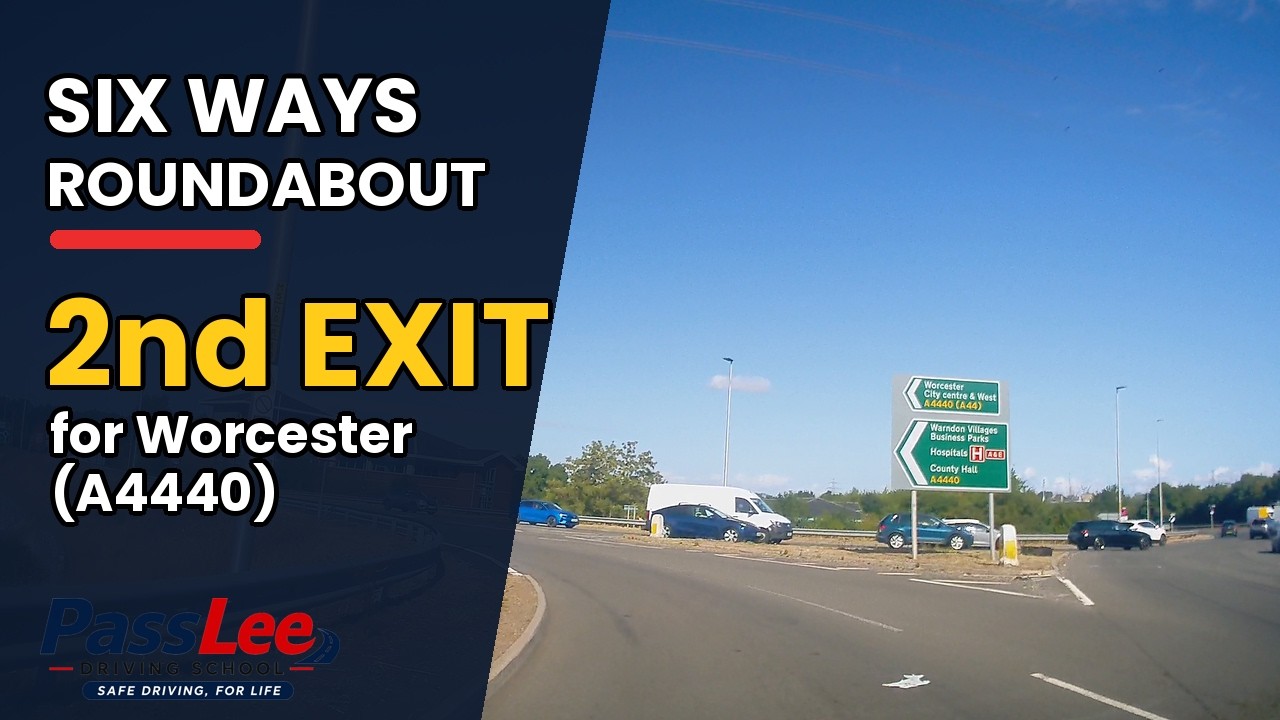
From Pershore Lane · A4440
Joining from Pershore Lane heading for the A4440. Look well ahead, choose your lane before the give-way line, and follow it round to the A4440 exit without changing lanes on the island.
The mistakes I see most at Six Ways (and what the examiner is watching for)
Nearly every fault at Six Ways falls into one of these:
- Reading the lane markings too late. By the time some learners spot which lane they need, they are already at the island and have to change lanes under pressure. Start reading the map-style sign and the painted destinations early.
- Being in the wrong lane for the exit – especially where two lanes share a destination. Remember the default: if two lanes say the same thing, take the left of the two.
- Drifting out of lane on the way round. The examiner wants to see you hold a steady line through the roundabout. Straddling or crossing a lane line, particularly on the curving exits, is the fault that most often turns serious here.
- Signalling at the wrong time. Indicating too early makes it look like you are leaving sooner than you are; forgetting to change to a left signal as you reach your exit confuses everyone behind you.
- Hesitation and speed. Too fast and there is no time to read everything; too slow and you frustrate the traffic behind. The examiner is looking for smooth, decisive, safe progress.
Get these five right and Six Ways stops being the scary one.
Six Ways Roundabout – FAQ
Ready to feel confident at Six Ways?
The quickest way to stop worrying about Six Ways is to drive it a few times with someone who knows it. I will take you through every approach at your own pace until it feels routine.